What are mason or other solitary bees?
Solitary bees, and mason bees in particular, are bees that nest in clusters yet use individual nesting holes. They provide a safe and effective alternative to full size honey bee hives in regards to pollination. Two solitary bees that do well in our area are the blue mason bee (Osmia Lignaria) and the horned-faced bee (Osmia Cornifrons).
Mason bees need a chemical free environment, a place to nest, mud and water, and flowers from your trees or garden. They will provide a maximum amount of pollination during late April, May, and the beginning of June. They are perfect for fruit trees and early garden needs.
Considered "super pollinators", as little as 250 females mason bees can pollinate an acre of apple trees, as compared to a full size colony of honey bees numbering 40,000
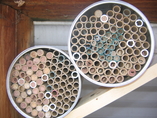
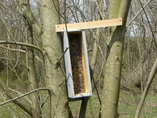
If you want the benefits of mason bees, yet do not want to handle or maintain colonies yourself, then contact us about having us do all the work for you. The nesting boxes the mason bees are housed in are small. About the size of a shoe box. They can be placed under a homes roof overhang or in a tree.
Mason bees are very sensitive to pesticides and chemicals. We offer these to backyard gardeners and for special circumstances where traditional full size honey bee hives may not be practical or desired. We do not offer mason bees as an alternative to traditional honey bee pollination for commercial operations and farms.
While some report that mason bees are somewhat immune to some the problems that honey bees face, that is simply not true. Chemicals, lack of forage, disease, and other issues also impact the mason bees. (As well as butterflies, bats, etc.) The shorter forage area of the mason bees (100-300 yards) limits the potential of chemicals to be minimized if the beekeeper selects good locations. Mason bees simply do not forage as wide of an area as honey bees, limiting the chemical/pesticide footprint of pollen they bring back to the nest/hive. While honey bee losses may be due to chemicals sprayed a mile down the road, if you lose mason bees, it is probably due to what you are using yourself.
Mason bees are safe, discreet, and enjoyable.
Mason bee starter kits are available on the Bjorn product page. We only mail mason bee starter kits in January and February. They can also be picked up during our scheduled mason bee demonstration weekend in the spring.